


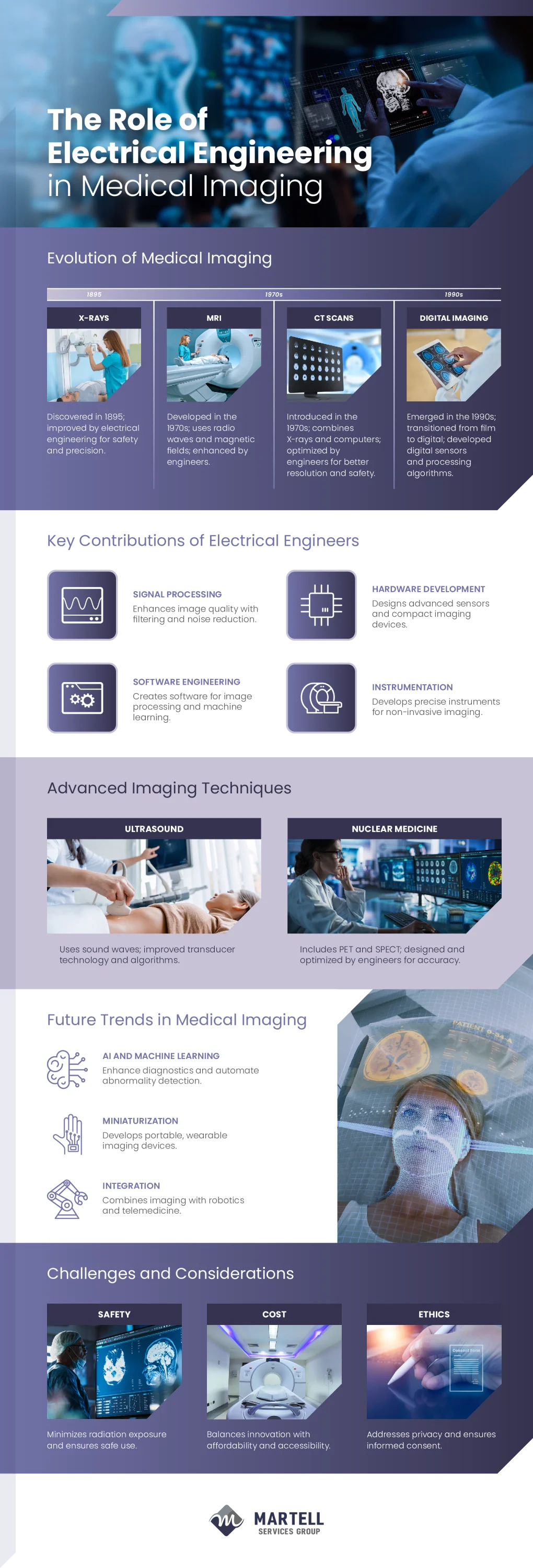
Electrical engineering has played a pivotal role in advancing medical imaging technologies, essential for diagnosing and monitoring various health conditions. From the early innovations in imaging to ongoing improvements in precision and safety, electrical engineers have transformed how medical professionals visualize the human body.
The journey began with the discovery of X-rays in 1895, which revolutionized healthcare by allowing internal views of the body without invasive surgery. Over time, electrical engineers refined X-ray technology, shifting from traditional film to high-resolution digital systems that enhance image clarity and streamline diagnostics.
In the 1970s, two groundbreaking technologies emerged: magnetic resonance imaging (MRI) and computed tomography (CT) scans. MRI uses radio waves and magnetic fields, while CT scans generate detailed cross-sectional images using X-rays. Electrical engineers have continually enhanced these technologies by improving image resolution, reducing scan times, and optimizing patient comfort.
The 1990s saw the transition from analog to digital imaging, a shift driven by advancements in digital sensor technology. This transformation improved image quality while making storage, retrieval, and sharing more efficient, significantly benefiting healthcare operations.
Beyond traditional imaging methods, electrical engineers have contributed to major breakthroughs in ultrasound technology. Enhanced transducer design and signal processing advancements have made ultrasound devices more portable and effective, particularly in emergency and prenatal care settings. Similarly, nuclear medicine has benefited from sophisticated detector and imaging software developments, allowing for precise metabolic analysis of diseases.
The integration of artificial intelligence (AI) and machine learning marks the next frontier in medical imaging. AI-driven algorithms enhance diagnostic accuracy by detecting subtle patterns in medical images that may go unnoticed by the human eye. These innovations reduce human error, speed up data analysis, and enable earlier disease detection.
Another exciting advancement is the miniaturization of imaging devices. Portable and wearable imaging systems are expanding access to diagnostics in remote and underserved areas, reducing the need for patients to travel to specialized facilities.
Despite these advancements, challenges remain. Reducing radiation exposure, lowering costs, and addressing ethical concerns regarding data privacy require continued collaboration among engineers, medical professionals, and policymakers.
For more insights into how electrical engineering continues to revolutionize medical imaging, refer to the accompanying graphic courtesy of Martell Services Group, an electrical contractor company.

Comments are closed.